Persistence
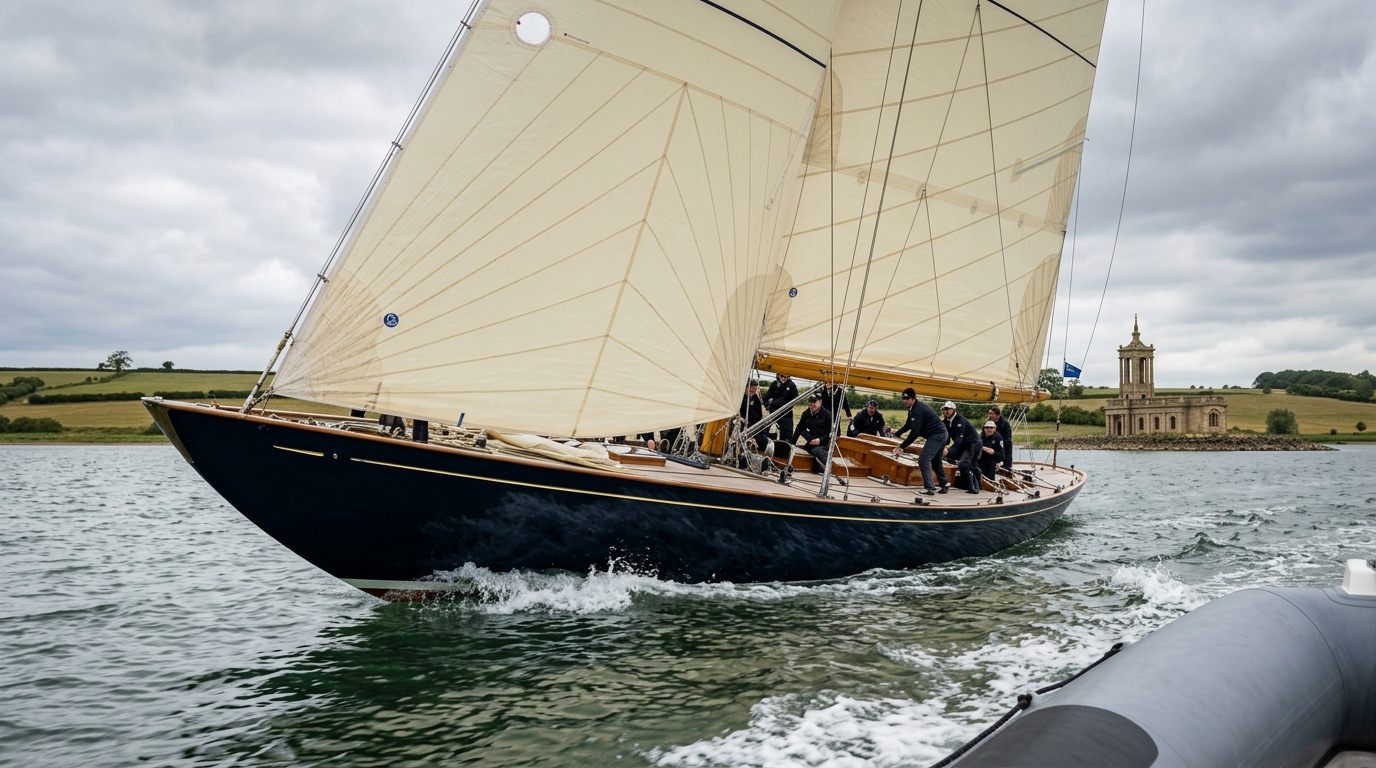
The J Class were the great America’s Cup yachts of the 1930s: forty metres of varnish, bronze and canvas, sailed by crews of thirty. Most of the survivors cruise between Antigua, Falmouth and the Solent. Persistence lives on a reservoir in Rutland, and has no plans to leave.
The Boat
- Class
- J Class (Universal Rule)
- Sail number
- JR 1 (the R is for Rutland)
- Built
- 2011, to an unbuilt 1930s design, in sections, in a barn near Oakham
- Length overall
- 42 m
- Draught
- 4.6 m, which rules out roughly half of the reservoir
- Mast
- 52 m above the water, visible from three counties
- Displacement
- About 170 tonnes
- Sail area
- About 800 m² upwind
- Crew
- Twenty-eight, or two village cricket teams and a scorer
How She Got There
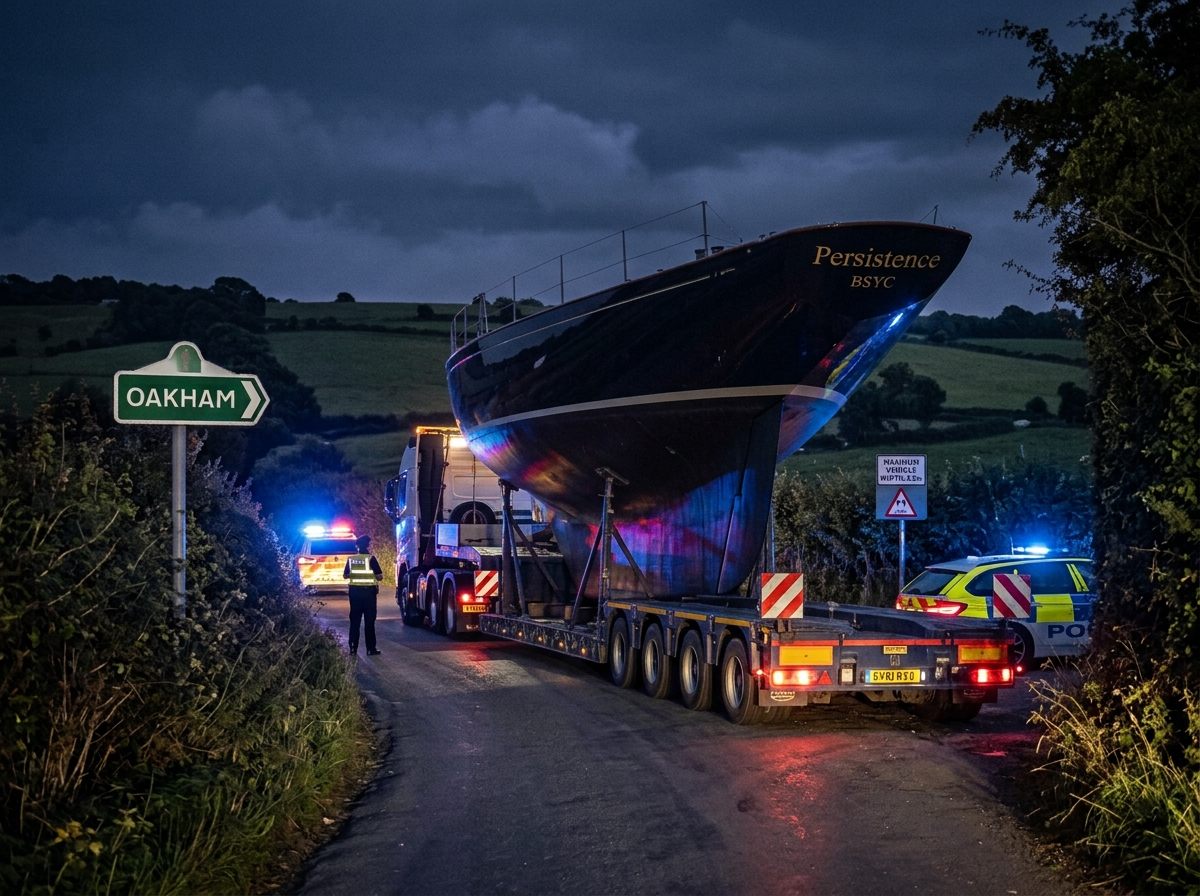
Rutland Water is some forty miles from the nearest salt water, which her owner regarded as a detail. She was built in seven sections and brought in on low loaders over four consecutive nights, under police escort, at a steady eleven miles an hour. The hull went last, in one piece, and several residents of the A606 still speak of it.
She was assembled and launched on the north shore in the spring of 2011. A study into returning her to the sea by the same route was commissioned in 2019. Its findings have not been discussed since, and the question is not raised at the AGM.
“People ask why she isn’t on the sea. I ask why the sea isn’t in Rutland.”
Where She Goes
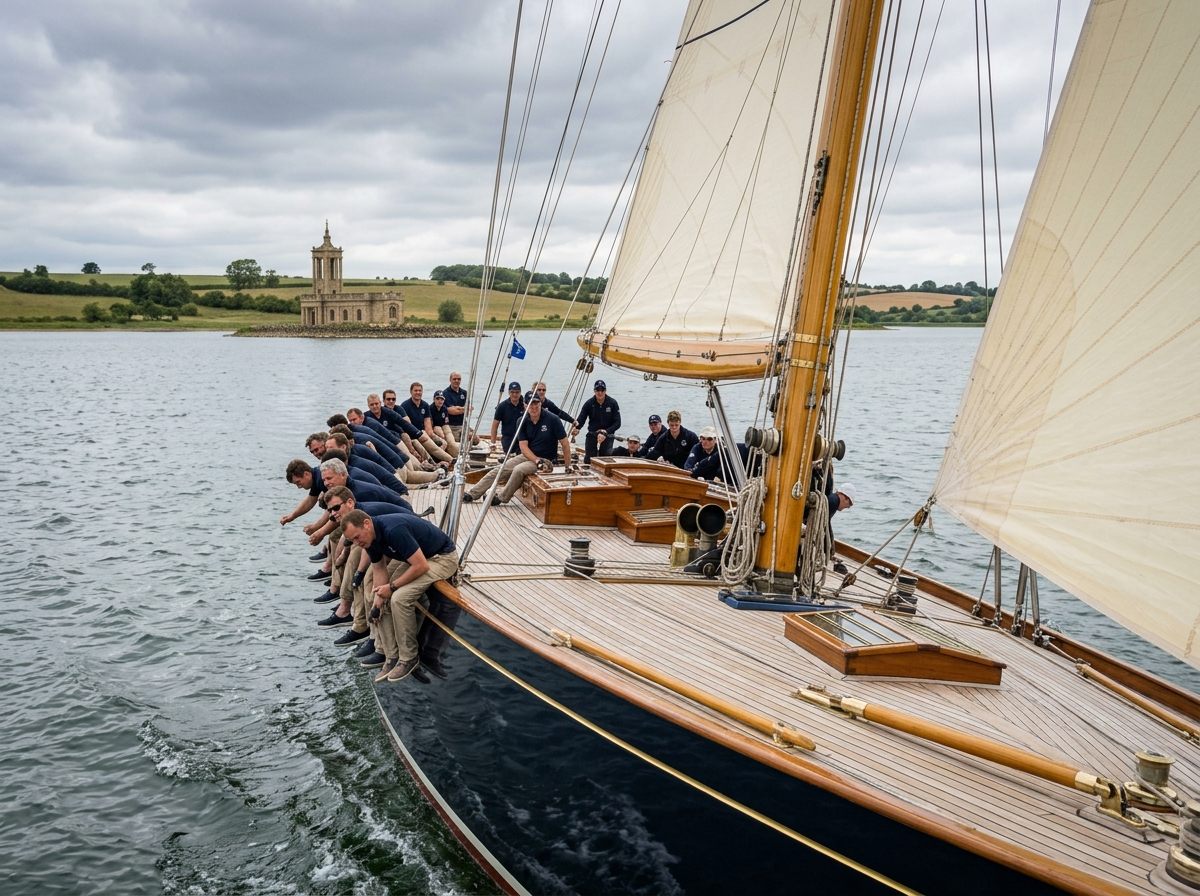
- Down the main basin towards the dam, where the water is deepest and she can sail without anyone on the bow taking soundings.
- Round the church at Normanton, which stands at the water’s edge on the south shore and serves as her windward mark. Nobody has yet failed to see it.
- Well clear of the nature reserve at the western end, by firm agreement with the osprey project. The birds are said to have shown an interest in her masthead.
- Past the fly fishermen in their boats, with whom relations are cordial but formal, and conducted largely by raised hat.
Racing
She has never raced another J. The rest of the class are on the sea, which her skipper considers their problem. At full speed she crosses the main basin in about twelve minutes and then needs most of another eight to tack, so the local dinghy fleet race around her, and on one occasion through her.